Electronics waste recycling
IT assets, laptops, servers, drives, monitors, network gear, batteries, and power electronics are sorted for reuse, parts recovery, material recycling, or documented downstream treatment.
Plan electronics pickup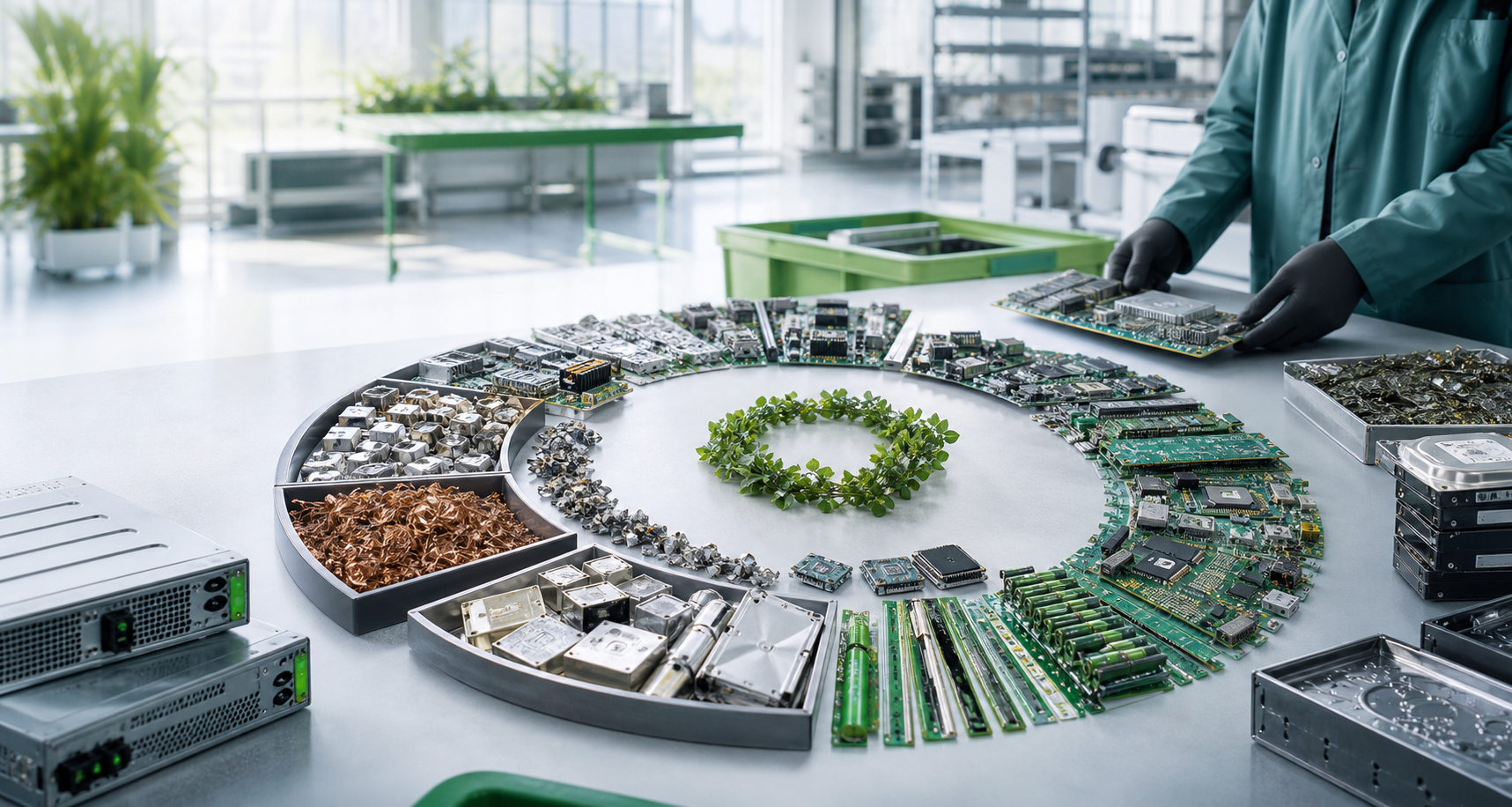
Recycling and destruction with proof
CircularGuard organizes electronics recycling and regulated destruction disposal for products, documents, apparel, beauty goods, food inventory, and other sensitive streams with clear records.
Why CircularGuard
Some materials should be repaired, remarketed, recycled, or regenerated. Others must be securely destroyed because of brand risk, expired inventory, confidentiality, safety, or compliance. We separate those decisions into clear operating paths.
About our approach
CircularGuard is designed around the same question responsible operators ask: what can be recovered, what must be destroyed, and what proof can we keep?
Two service lanes
IT assets, laptops, servers, drives, monitors, network gear, batteries, and power electronics are sorted for reuse, parts recovery, material recycling, or documented downstream treatment.
Plan electronics pickupFood, documents, apparel, beauty products, branded goods, expired inventory, and confidential materials are routed for secure destruction, disposal, or recovery where a compliant path exists.
View destruction categoriesOffice cleanouts, warehouse pulls, palletized moves, sealed containers, and multi-site pickups with practical packing guidance.
See the workflowCertificates, asset or product closeout, destruction summaries, recovery metrics, and landfill-diversion documentation for internal stakeholders.
See reporting proofDestruction categories
Manage returns, expired lots, damaged packaging, and brand-protected goods with closeout documentation.
Sort branded apparel, uniforms, samples, and unsellable textiles for destruction, recycling, or reuse where allowed.
Support expired, recalled, damaged, or non-saleable food disposal with landfill-diversion review when practical.
Coordinate paper files, archives, labels, samples, and confidential non-electronic material destruction.
Process
We confirm material type, risk level, site access, packaging needs, and pickup timing.
Items are counted, categorized, photographed or serialized where useful, and separated by recovery or destruction path.
Sensitive goods are contained and handled to protect data, brand, product safety, and compliance requirements.
Reusable or recyclable materials move toward recovery; restricted goods move toward destruction or regulated disposal.
You receive certificates, disposition summaries, diversion metrics, and closeout records for stakeholders.
Reporting
Every engagement can include intake records, destruction certificates, pickup documentation, downstream category summaries, and diversion reporting. The goal is simple: no mystery bins, no blind handoffs, no unsupported claims.
Exploring new demand
We are building toward practical U.S. circular-economy ideas: landfill diversion, product stewardship, right-to-repair thinking, closed-loop materials, and transparent ESG-ready evidence.
Review each stream for reuse, donation where allowed, recycling, composting, energy recovery, or compliant destruction.
Turn disposition data into a roadmap for more materials returning to productive use instead of one-way disposal.
Support brands and operators that want stronger responsibility for products after sale, return, recall, or expiration.
Who we serve
Rapid estimate
Tell us whether you need electronics recovery, product destruction, document destruction, or a custom program.
Send counts, material categories, photos, locations, and security or brand requirements.
Receive a practical collection path, documentation scope, and next steps.
Controls & documentation
Blog & resources
How to decide whether a material should be recovered, recycled, destroyed, or documented separately.
Why proof matters for files, branded products, expired goods, and confidential materials.
How to move from one-off disposal toward measurable diversion and regeneration goals.
Start a pickup
Send a material list, a few photos, or a rough count. CircularGuard will respond with a collection, destruction, or recovery plan and the documentation path that fits your risk level.